|
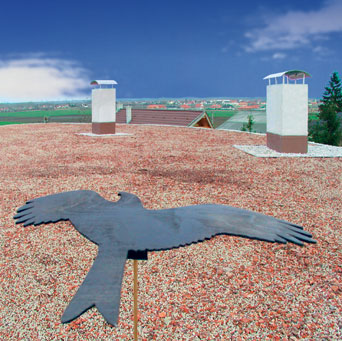
Newly planted
areas need to be protected from damage from birds before a roof
garden can be returned to nature. Birds, in particular sparrows and
pigeons, feed on seeds and young shoots and scratch out plants. This
damage then has to be put right at some expense. A way round this is
to set up a scarecrow, a simple but very effective optical
preventative method. The birds see the silhouette and avoid the
roof.
|
|
| |
Sparrowhawh Scarecrow
|
|
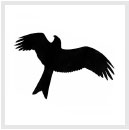
The
Sparrowhawk silhouette is mounted on a stand and moves
gently in the wind. The large base is placed on the
filter-membrane and covered with substrata. On roof garden
with a depth of less than 12 cm, it is suggested that the
base is covered with something more substantial than soil.
The stand can be extended by adjustable screws to a maximum
height of one meter. |
 |
|
|
|
| |
Use
|
|
One
scarecrow should be used per 100 m2 of roof, but at least
two should be installed on every roof in order for the
protection they afford to be effective. This protection
can be enhanced by occasionally moving the silhouettes to
new locations. In particularly windy locations, such as
parapet areas, we recommend that the scarecrows are fixed
more firmly.
|
 |
| |
|
|
|
|
| |
Cat Scarecrow
|
|
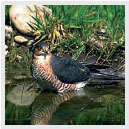
The cat
silhouette is mounted directly onto the lid of an inspection
box. Because of their high profile, and exposure to the wind,
it is essential that only lockable inspection boxes are used
for this purpose. |
 |
|
| |
Enviromental-Friendly
|
|
The
silhouettes are made from wood and rot away after a
year-and-a-half to two years. The birds can then take the
roof over without imposing any financial cost on man. This
method fits well into the philosophy of rooftop gardening
and is recommended by leading ornithologists. |
|
| |
|
|